
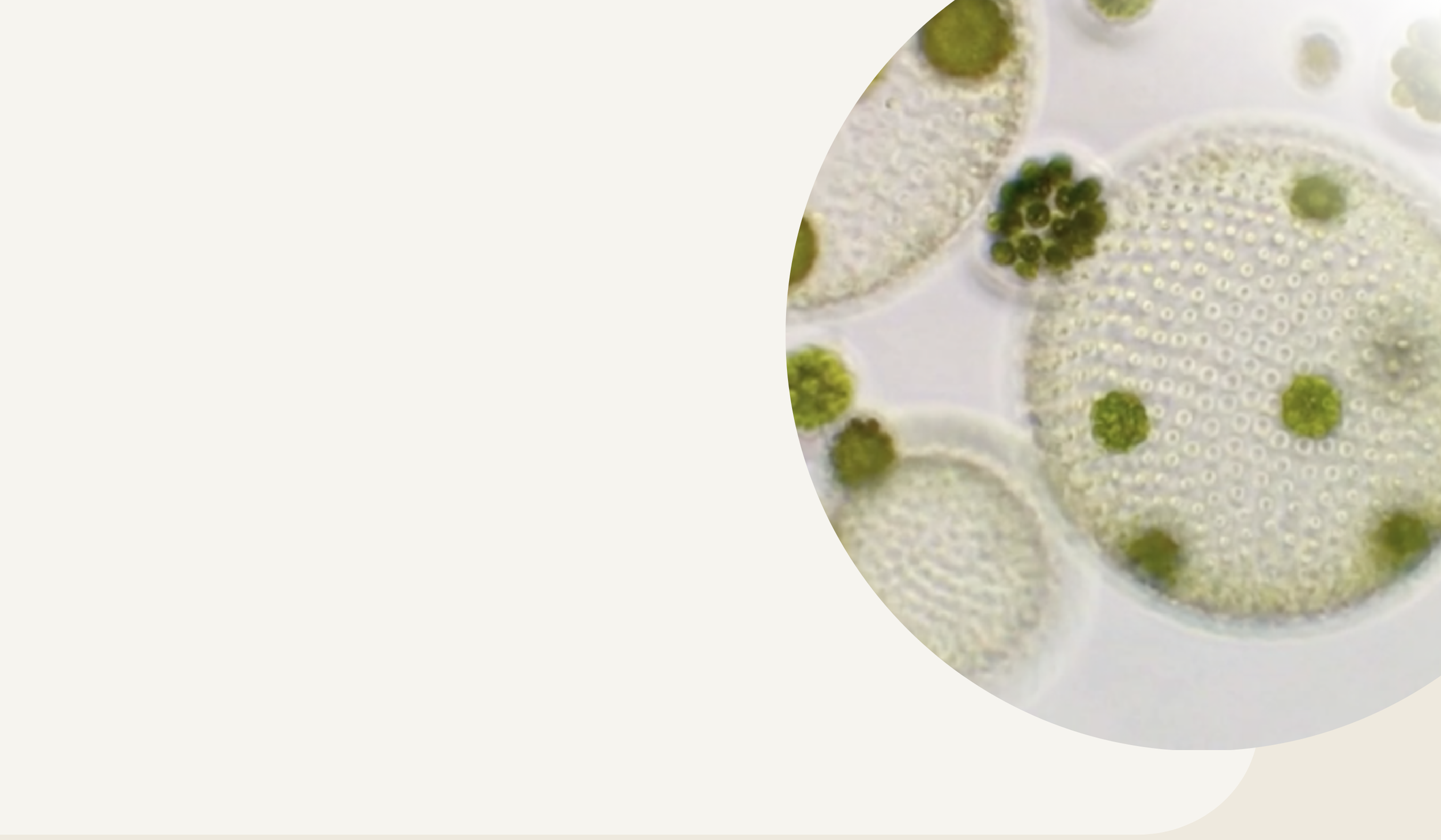
The next industrial revolution runs on biology.
We’re taking biomanufacturing out of the steel tank and into the real world.
Switch Bioworks is a deep tech company programming microbes to replace energy-intensive, fossil fuel-dependent industrial processes.
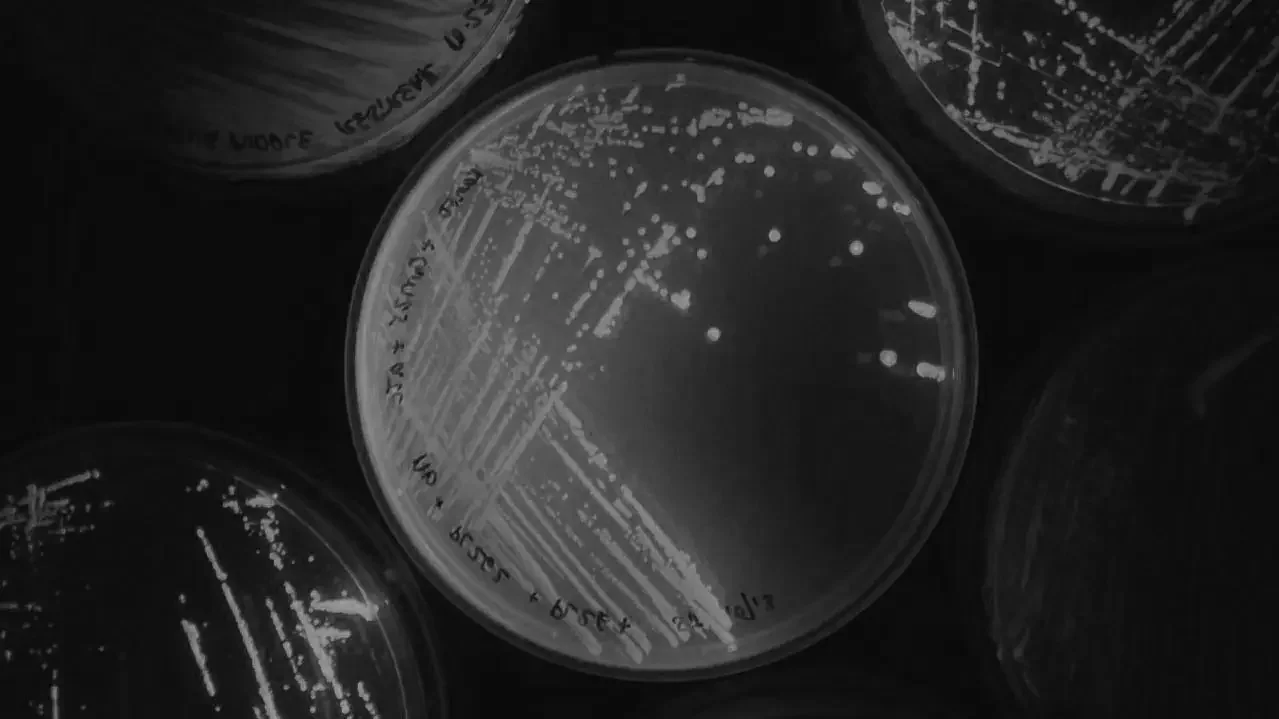
We engineered an on-switch for microbes
Engineered microbes could make much of what industry makes today. Drugs, materials, fertilizer. The catch has always been survival. A microbe can't establish itself and produce at full output at the same time. Both take energy, so doing both at once means doing neither well. That single constraint has kept biomanufacturing locked inside the steel tank for decades.
Switch breaks it with a genetic switch that separates the two phases. Microbes can now tell time. First they establish themselves in their environment, then they switch on production. As doublings scale exponentially, so does what we can make when the on-switch kicks in. These design principles and platform unlock a new, multi-vertical opportunity: moving biological manufacturing beyond steel tanks and into the world.
THE FIRST APPLICATION:
The input the whole food system runs on.
Food security is a foundation of national security, and it rests on one input more than any other: nitrogen. So that’s where Switch started.
Nitrogen fertilizer still relies on Haber-Bosch: a century-old process with an enormous energy and carbon footprint. Despite its strategic importance, we’re still producing one of agriculture’s most essential inputs with technology developed more than a century ago.
For a century, fertilizer has run on gas.
Fertilizer isn’t just a chemical input. It’s an energy asset hiding in plain sight.
5%
OF GLOBAL CARBON EMISSIONS
come from nitrogen fertilizer production.
200
NUCLEAR POWER PLANTS
worth of energy used to produce nitrogen fertilizer.
THE MODEL:
Ours runs on the plant itself.
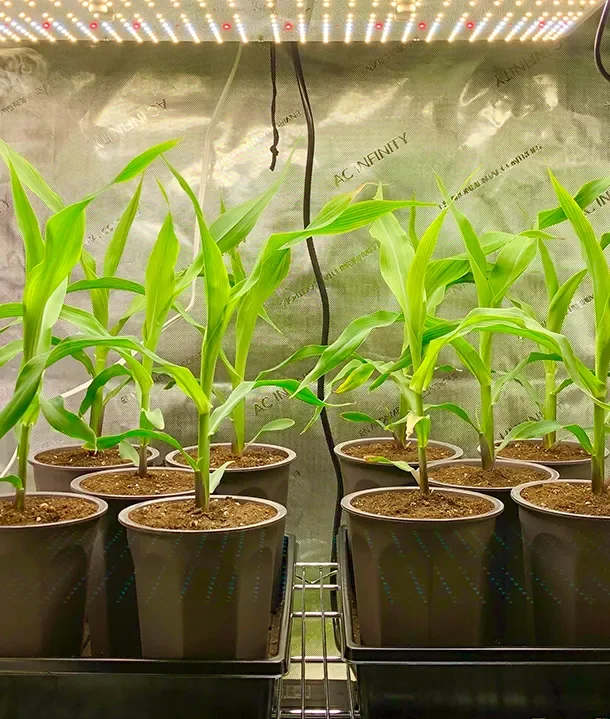
Switch transforms how the world produces fertilizer. Using microbes that live on plant roots, we produce the same ammonia molecule as Haber-Bosch—but biologically, powered by the plant itself. Our programmed microbes first establish on the root, then switch on nitrogen production when needed.
Production happens directly on the root wherever crops are grown, replacing dependence on centralized facilities and volatile global gas markets with scalable biomanufacturing economics. The result is a more resilient fertilizer supply, insulating growers from geopolitical instability and the volatility of global energy markets.
THE SWITCH:
The problem was never nitrogen. Timing is everything!
Microbes that live on plant roots can make the same molecule as that century-old Haber Bosch process: ammonia — nitrogen fertilizer. Biology has promised this for decades and underdelivered, and Switch found out why. Two things have to be true at once, and both cost the microbe energy: it has to be engineered to release the nitrogen it fixes so the plant can use it, and it has to establish on the root in high numbers. Do both at the same time and neither works.
Switch broke the trade-off with a genetic switch. The microbes establish on the root first, then turn on nitrogen production on cue. Separating establishment from production is the insight every prior approach missed — and it isn't specific to nitrogen. Anywhere an engineered microbe has to survive before it performs, the same switch applies.
HOW IT WORKS:
From powder to production, on the root.

produce
We produce microbes and formulate them into a powder. Each ounce of powder contains billions of sleeping microbes.

Apply
Farmers rehydrate microbes to awaken them and apply at crop sowing.

Grow
Microbes first proliferate alongside germinating plants. More microbes, more nitrogen!

feed
Through a proprietary mechanism, microbes then switch on nitrogen fertilizer production.
DEEP TECH TEAM:
Built to solve the problems biology couldn’t.
Founded by Dr. Tim Schnabel out of a decade of research at Stanford, Switch Bioworks brings together bioengineers, molecular biologists, and synthetic biology researchers working at the forefront of genetic programming.
The team tackles foundational challenges in living systems to engineer high-impact solutions that scale far beyond nitrogen fertilizer.
